


![collections[childlink.object.handle].title](http://islamicwallartstore.com/cdn/shop/collections/ramadan-decorations-eid-decorations-116724.jpg?v=1767782468&width=300)
![collections[childlink.object.handle].title](http://islamicwallartstore.com/cdn/shop/collections/ramadan-lantern-metal-islamic-wall-art-home-decor-415958.jpg?v=1767873790&width=300)
![collections[childlink.object.handle].title](http://islamicwallartstore.com/cdn/shop/collections/date-holders-for-ramadan-6-pcs-date-stands-with-bismillah-calligraphy-iftar-table-decor-982187.jpg?v=1767873935&width=300)
![collections[childlink.object.handle].title](http://islamicwallartstore.com/cdn/shop/collections/kalima-tawheed-mihrab-wall-art-for-prayer-spaces-geometric-design-perfect-symmetry.jpg?v=1767873771&width=300)
![collections[childlink.object.handle].title](http://islamicwallartstore.com/cdn/shop/collections/IWA8784_copy_2.jpg?v=1767873884&width=300)
![collections[childlink.object.handle].title](http://islamicwallartstore.com/cdn/shop/collections/ramadan-calendar-pouch-islamic-gift-for-kids-and-family-538861.jpg?v=1770236867&width=300)

Dua for After Wudu: Its Words and Meaning
The dua recited after wudu, with Arabic text, transliteration and translation, and the hadith in which it is reported.

On this page

Wudu (ablution) is a ritual washing that purifies a Muslim before prayer. It’s an essential part of preparation for salah, and it carries spiritual significance – in fact, a famous hadith tells us that “cleanliness is half of faith”. But did you know that after completing wudu, the Prophet Muhammad (peace be upon him) taught us to say a beautiful short dua (supplication)? This dua is simple, uplifting, and brings great blessings. In this post, we’ll explore the dua for after wudu in Arabic (with transliteration and meaning), see what authentic sources say about it, and understand its significance in daily life.
Why Say a Dua After Wudu?
Finishing your wudu with a dua transforms a routine act of washing into an act of worship. The Prophet (ﷺ) encouraged Muslims to remember Allah with this supplication once they complete ablution. According to an authentic hadith, “None of you makes wudu and does it well, then says this dua except that all eight gates of Paradise are opened for him, so he may enter by whichever he pleases.” In other words, reciting this short prayer after wudu is a means to immense reward – the eight gates of Jannah (Paradise) opening for you.
Saying the dua after wudu is sunnah, not an obligation, but it is highly recommended. It’s a way to seek Allah’s pleasure and add spiritual completeness to your physical purification. By thanking and praising Allah right after purifying our bodies, we also purify our hearts with remembrance. This habit cultivates gratitude and humility, reminding us that guidance and cleanliness (both inner and outer) come from Allah. Even small actions, when done with sincerity and dhikr (remembrance of Allah), can carry huge blessings.
The Dua to Recite After Wudu
After completing wudu, it is sunnah to recite the following dua, which is essentially the Shahada (testimony of faith):
These blessed words reaffirm one’s faith right after attaining purity. In essence, you are declaring the oneness of Allah and the messengership of Prophet Muhammad once more. What a perfect way to conclude wudu. You cleanse your body, then renew your belief with your tongue and heart.
This dua is mentioned in authentic hadith collections. For example, Sahih Muslim narrates from Umar ibn al-Khattab (may Allah be pleased with him) that the Prophet ﷺ said whoever performs wudu properly then says this Shahada, “the eight gates of Paradise will be opened for him, and he may enter through whichever of them he wishes.” This emphasizes how beloved this remembrance is to Allah. By reciting it, we seek Allah’s acceptance of our wudu and prayer, and hope for the ultimate reward (entry into Jannah).
Another Sunnah Dua After Wudu
Some narrations also indicate that the Prophet ﷺ would occasionally add a short prayer for spiritual purity after the Shahada above. You may choose to say the following additional dua after wudu, although it’s not obligatory:
These prophetic words beautifully complement the first dua. We ask Allah to keep us among the repentant (those who turn back to Him) and the purified. It highlights that wudu is not just about physical cleanliness. It is also about spiritual purification. We seek Allah’s help to remain clean from sins through repentance, just as we cleansed our bodies with water.
Some books of du’a also mention another phrase of praise and repentance –“Subhanaka Allahumma wa bihamdika, ash-hadu an lā ilāha illā Anta, astaghfiruka wa atūbu ilayk,” meaning “Glory and praise be to You, O Allah... I seek Your forgiveness and repent to You”. This final part is often known as the Kalimah of Kafaratul-Majlis, usually said after gatherings, and is sometimes cited after wudu as well. It’s not as commonly recited for wudu, but there is no harm in saying it as a general dhikr.
The Significance of This Dua in Daily Life
In daily life, the dua after wudu serves as a constant reminder of faith and humility. Think about it: we perform wudu multiple times a day before prayers. Each time, by saying this supplication, we refresh our iman (faith) and reaffirm our dedication to Allah. It turns a simple routine (washing up) into a moment of connection with the Divine. You pause for a few seconds to remember Allah – and in return, Allah promises tremendous reward. This practice keeps us mindful that every act of worship, even the preparatory steps like wudu, should begin and end with Allah’s name and remembrance.
Reciting the dua after wudu can also bring peace and positivity into your day. It’s a brief moment of dhikr that can calm your heart. You are essentially making a mini-declaration of faith and asking Allah for purity of soul, which can wipe away minor sins and mistakes by the will of Allah. One hadith indicates that by completing wudu and reciting the Shahada, a person’s past minor sins are forgiven (since wudu itself expiates sins, and following it with shahada and repentance strengthens that effect). Thus, this dua is a source of forgiveness and mercy.
Moreover, saying this dua consistently helps you stay humble. It reminds you that while you can wash your limbs with water, true purity and guidance come only from Allah. It protects against any pride in one’s cleanliness or worship by immediately turning the focus back to Allah’s greatness and our dependence on Him. The phrase “make me among the repentant and purified” teaches us that we should always seek to purify our hearts just as we purified our body, and always repent for our shortcomings.
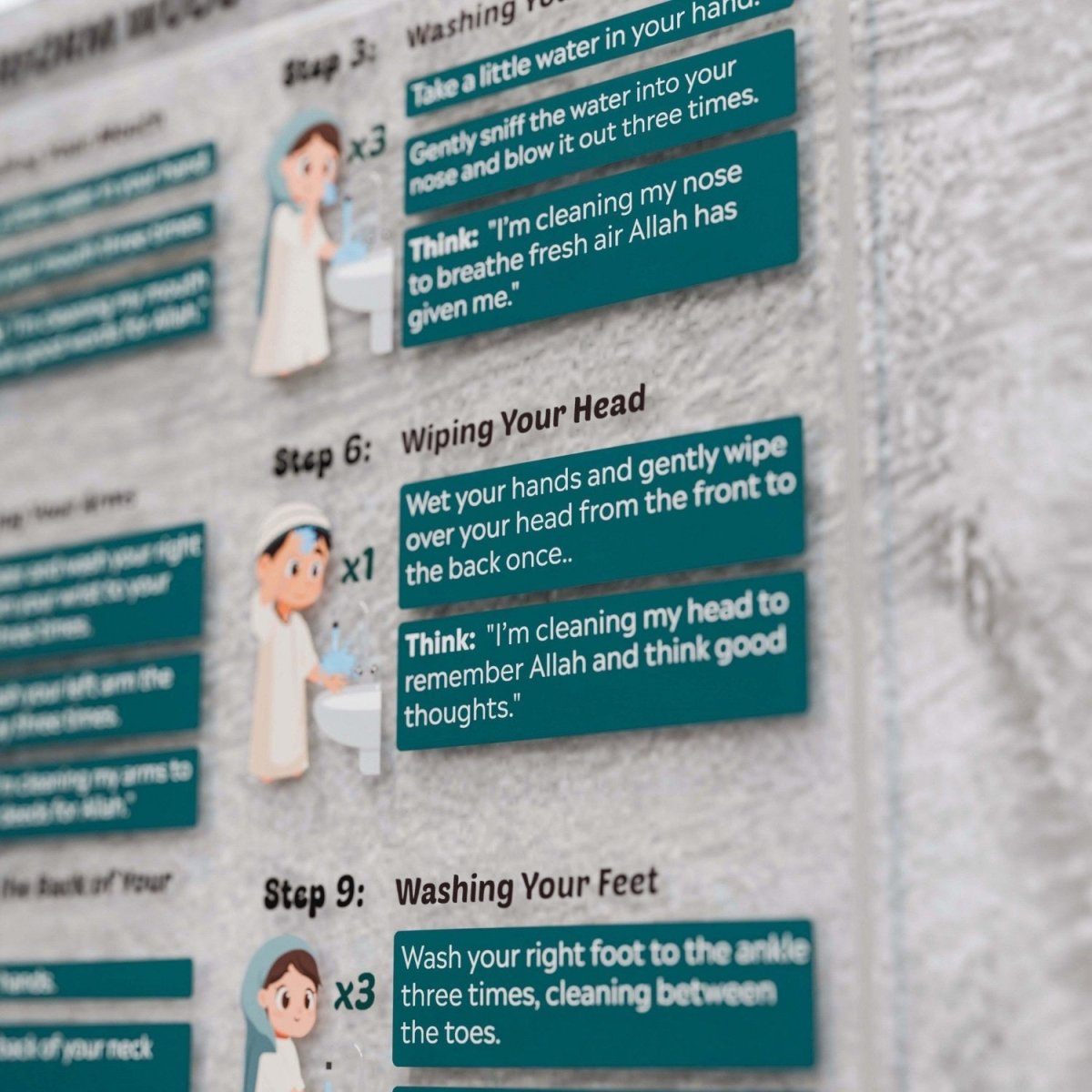
A Visual Journey to Prayer for Your Children
Transform wudu time into a joyful learning experience. This elegant acrylic guide helps children follow each step with ease, making it a beautiful and functional addition to your home.
Get the Kids' Wudu GuideA Simple Habit with Great Rewards
The dua for after wudu is easy to memorize and takes only a few seconds to say, yet it carries tremendous benefits. It is a sunnah of our beloved Prophet ﷺ, a declaration of faith, a prayer for spiritual purity, and a ticket to Paradise – all in one! By incorporating this small habit after each ablution, you infuse your everyday routine with meaning and reward. You’ll feel a deeper connection to Allah as you prepare for prayer, and you’ll be following a practice that the Prophet ﷺ himself performed and strongly encouraged.
Next time you finish your wudu, take a moment to recite this dua. Say it with presence of heart, understanding each word. Over time, you’ll notice how it boosts your spirituality. It’s a beautiful way to complete your purification with du’a and gratitude.
Don’t miss out on this prophetic practice. Make the dua after wudu a regular part of your day. It renews your faith, earns forgiveness, and brings you closer to Allah’s pleasure. Such a simple, friendly act of remembrance can light your path – in this life and the next. May Allah accept our wudu and prayers, and make us among the purified!


Leave a comment