



Différentes idées pour la décoration d’une pièce islamique
Room-by-room Islamic decor ideas, with notes on scale, colour and placement that keep a scheme calm rather than crowded.

Sur cette page
Most Islamic decor guides sort by material or by verse. That is not how anyone actually decorates. You decorate one room at a time, and each room has its own constraints — humidity, sightlines, whether you are allowed to drill. Here is the room-by-room version.

Entryway
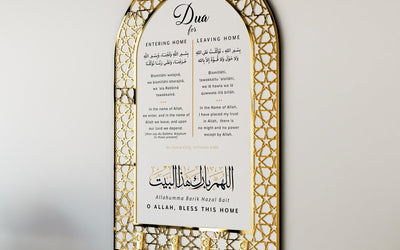
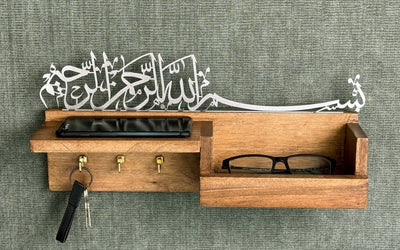
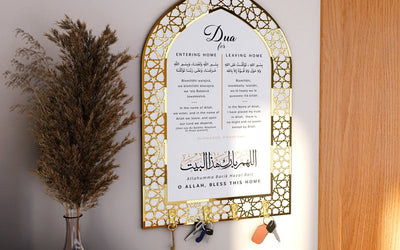
The entryway is the highest-traffic wall in the house and the one people spend least time on. It also has a built-in decorating advantage: something functional there gets used every day, which is why the hallway is where our best-selling piece lives.
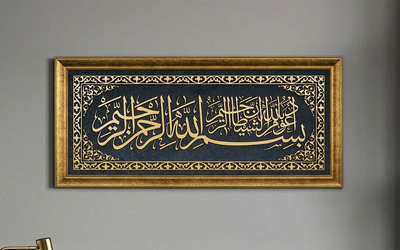
- What works: a key holder carrying the dua for entering and leaving the home, or a Bismillah at eye height beside the door.
- Size: 30×45 cm is the size that sells best by a wide margin — large enough to read from the doorway, small enough not to crowd a narrow hall.
- Watch for: hanging it where the door swings. Measure the arc before you drill.
See key holders for the entrance.
Living room
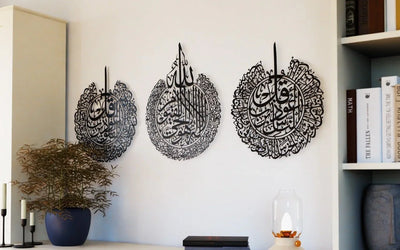
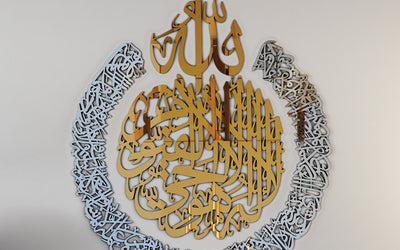
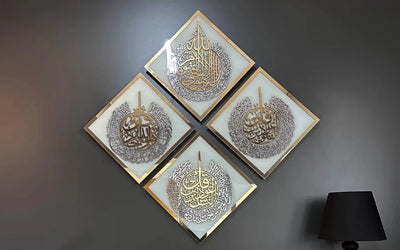
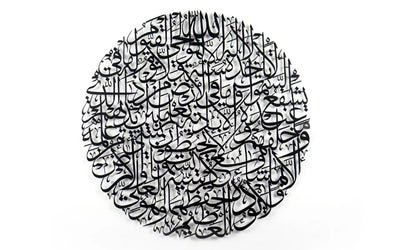
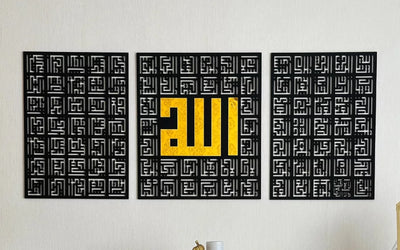
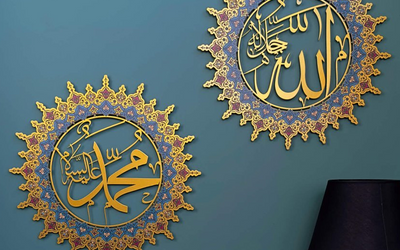
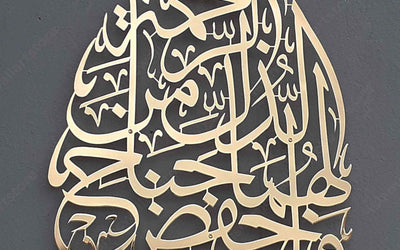
One large piece beats three medium ones. The wall above the sofa is the obvious spot, and the only rule that really matters is width: aim for roughly two thirds of the sofa's width, with 15–25 cm of clearance above the back.
We have written this one up in detail, with the size and finish data behind it, in our guide to metal wall decor for the living room.
Dining room and the iftar table
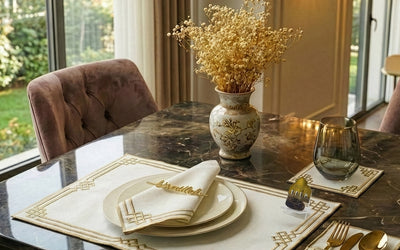
The dining room is the one space where the decor is horizontal rather than vertical, because everyone is seated and looking across rather than up.
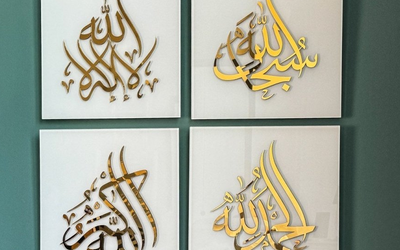
- Tabletop pieces do more here than wall art. A Bismillah / Alhamdulillah / MashAllah set at 32×8 cm sits on a sideboard or the table itself and needs no fixings at all.
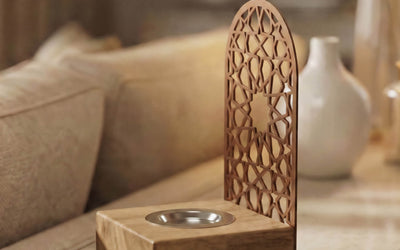
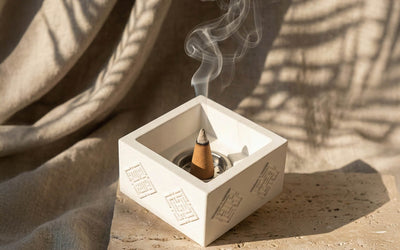
- Candleholders change the room more than any wall piece, because they change the light. The Hadha Min Fadli Rabbi candleholder is our best seller in that category.
- Keep the wall behind the head of the table clear or give it one calm horizontal. It is the wall everyone faces for an hour at a time.
Bedroom
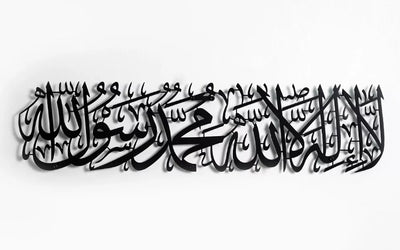
Above the headboard is a narrow band, so the format matters more than the design. Long horizontals of 65–100 cm wide and 16–24 cm tall — the First Kalimah, a short dua, a Bismillah — fit where a square would not.
Two practical notes: hang it high enough that nobody sitting up in bed hits it, and prefer a matte or wooden finish. A polished metal piece opposite a window will throw light across the room at times you would rather it did not.
Children's room
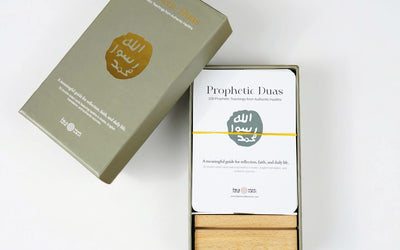
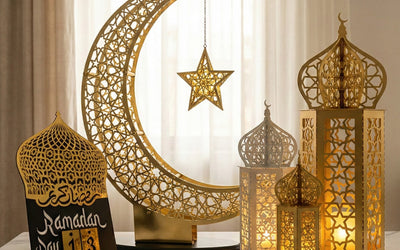
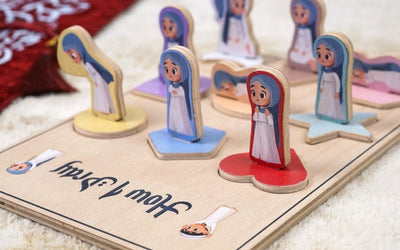
The useful thing about a child's room is that decor there can teach. Countdown calendars, learning cards and dua pieces in Latin as well as Arabic script all do double duty, and children read Latin numerals and transliteration long before they read Arabic fluently.
Fix everything properly. A child's room is the one place where an adhesive strip is not good enough. See children's room decor.
Study and library
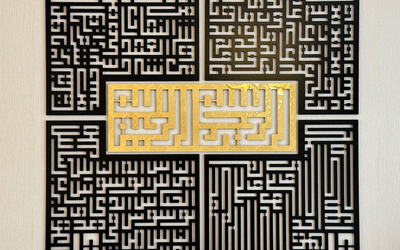
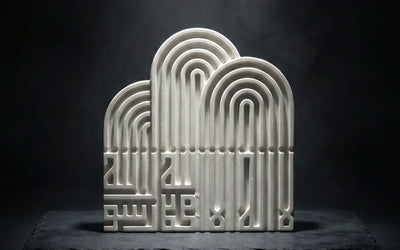
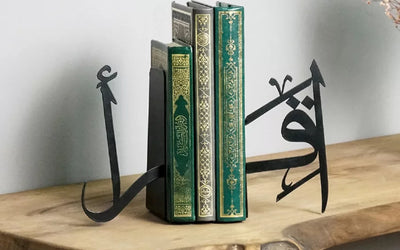
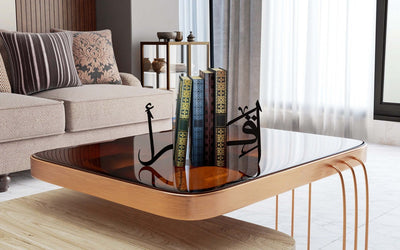
Shelves are usually already full, so the decor has to earn its place by doing a job. Iqra bookends — "read", the first word revealed — hold books upright and are the obvious choice for a desk or a bookshelf. The full bookend range includes Allah and Muhammad pairs and Kufic designs.
Prayer corner
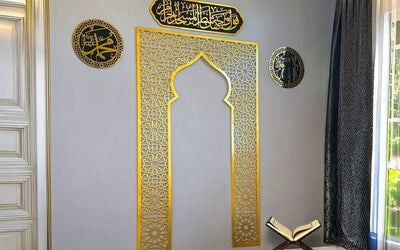
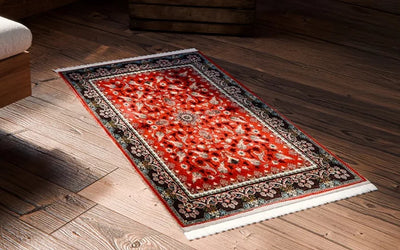
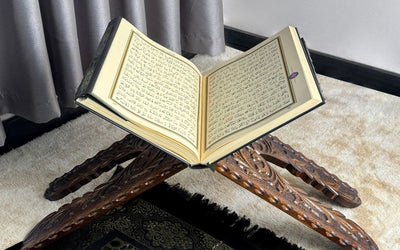
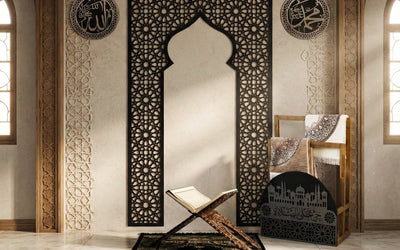
This is the one space with real requirements rather than preferences: clear floor for the sajdah, an unbroken wall in the qibla direction, and storage for a rug and a Qur'an within reach. A mihrab panel marks the wall; nothing should hang low enough to be in the way of prostration.
Our prayer corner setup guide has the measurements; the prayer room collection has the pieces.
Kitchen and bathroom
Material, not design, is the decision here. Sustained humidity swells MDF at the cut edges and will eventually open a joint, so wood-and-acrylic panels belong elsewhere. Tempered glass is the right answer for a bathroom or an unventilated kitchen; coated metal is fine in a normal ventilated kitchen but should not sit directly above a hob.
A note on figurative decor
Many Muslim households avoid figurative representations of people and animals in the home, which is one reason calligraphy and geometry became the dominant decorative languages in Islamic art. Practice varies between schools of thought and between families, and this is a question for your own scholarly reference rather than a decorating rule we would presume to state. What is true either way is that the calligraphic and geometric traditions are deep enough that nothing is being given up.
Where to start
If you are furnishing from scratch, start with the entryway and the living room — the two rooms everyone sees — and let the rest follow. Browse Islamic home decor, or the tabletop range if drilling is not an option.


Laissez un commentaire