



How Mosque and Masjid Interiors Are Decorated, and What a Home Can Borrow
How mosque interiors are composed from calligraphy, the mihrab and ornament, and how the same ideas scale to a home prayer corner with a mihrab set.


On this page
A mosque or masjid interior is built from three things: calligraphy plates hung on the walls, a mihrab decorated with geometric patterns and verses, and colorful stained glass windows, all kept in harmony with each other and with the building. The same ideas scale down to a home or office prayer corner, where a mihrab set, calligraphy and a clock do the same work.
Plan the interior decoration together with the building
From the past to the present, mosque designers have generally focused on the majestic appearance of the exterior and left the decoration of the interior to the users to arrange later. The interior and exterior of a mosque or masjid should be handled with a holistic approach while it is still under construction. The psychological needs of worshippers should be taken into consideration, so that the interior creates a climate of peace.

The purpose of these decorations is not only an aesthetic appearance that pleases the eye, but also to help the worshipper go deeper into worship and establish a spiritual connection. Ornament should be an important part of the mosque's components when it is designed, not an afterthought or a way of filling gaps, and it should not be uncontrolled or unnecessary.
Choose restrained decoration that suits the building and the prayer
The decoration preferences of each mosque are influenced by the tall minarets, domes and other architectural structures around it. Because they are places of worship, decorative products should be chosen to avoid luxury and pomp and to respond to the need for silence in prayer. They should not distract worshippers from the spiritual atmosphere: religious paintings, plates and writings with Islamic motifs and verses suit best.

Traditional Islamic ornaments made with meticulous craftsmanship should reflect the historical heritage and help us understand the origin of the decoration, keeping a balance between aesthetic balance and spiritual peace. The choice of colors matters too: warm and soothing tones that do not overly distract attention suit a prayer space.

Read ornament as flexible, regional and tied to calligraphy
The concept of ornamentation in Islamic art is inherently flexible. It does not depend on a specific form, material or scale, and a single piece in the environment can gather the ambiance of the entire space. Each society is influenced by its own symbolism and motifs, so ornamentation varies from region to region: North African countries, Far Eastern countries such as Malaysia and Arab countries in the Middle East prioritize different motifs.
The characteristics of Islamic ornament in sacred sites are:
- patterns that emphasize infinity and add strength,
- the demonstration of God's infinity and wahdat,
- the presence of Arabic calligraphy,
- the transformation of the words of the Holy Qur'an into a work of visual art.

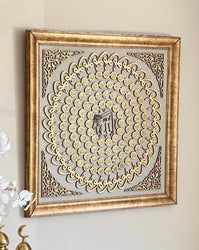
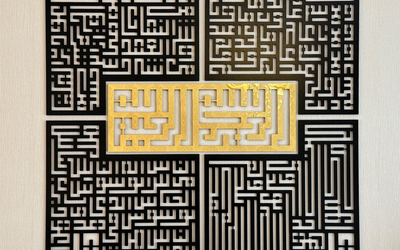
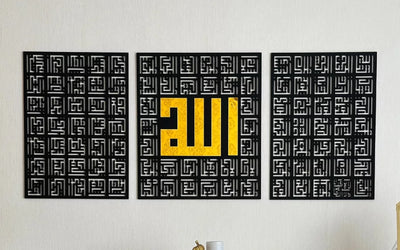
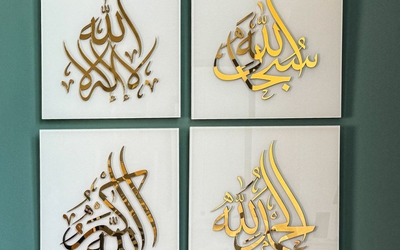
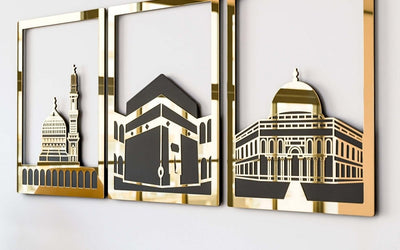
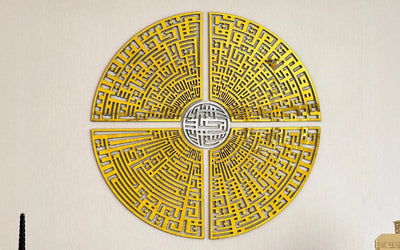
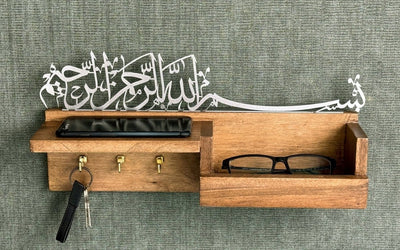
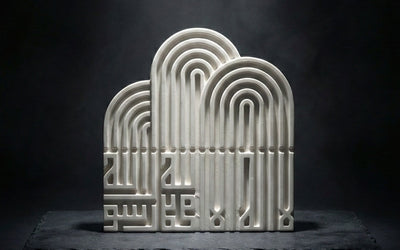
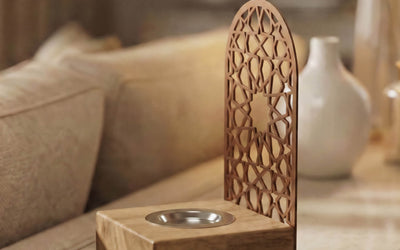
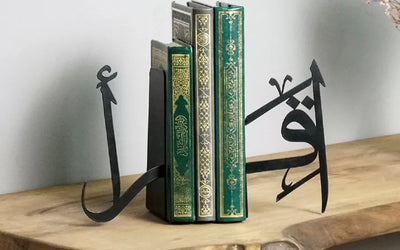
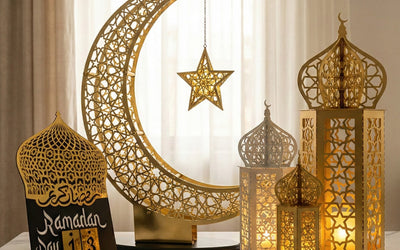
Metal and wood ornaments can be integrated into the wall art of a mosque interior, and the same pieces sit in a home. The 99 Names wooden-acrylic piece sold 176 units in the twelve months to 3 November 2026.
Use calligraphy to carry the words of the Qur'an into the room
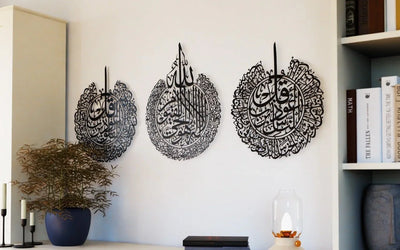
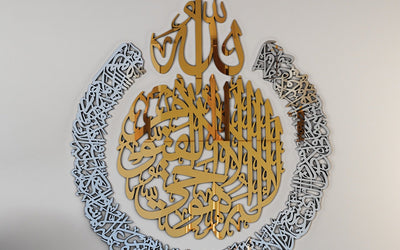
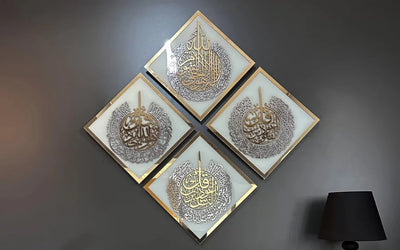
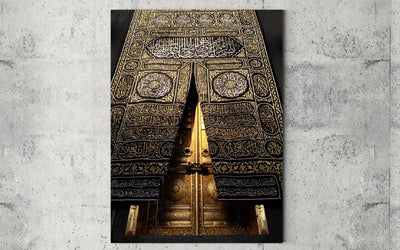
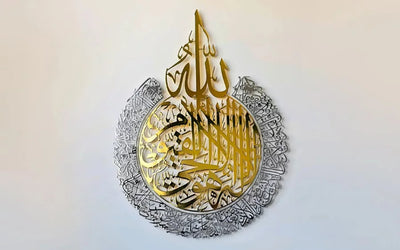
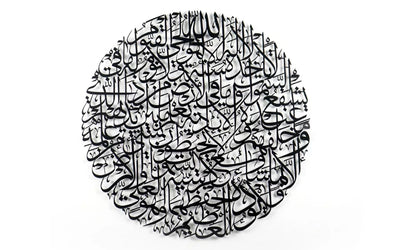
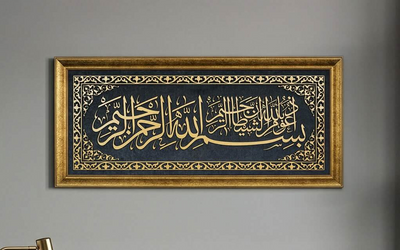
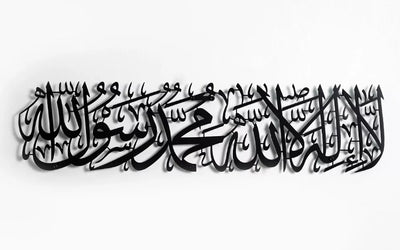
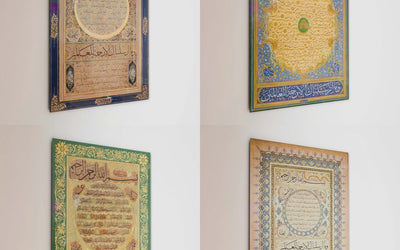
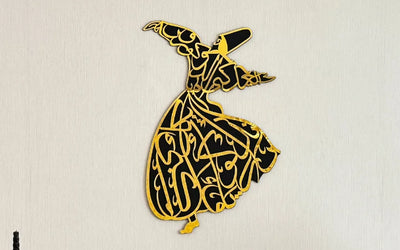
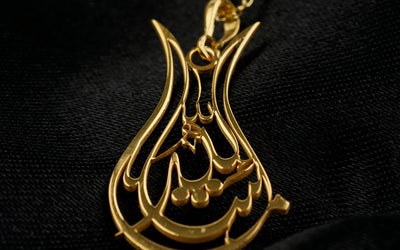
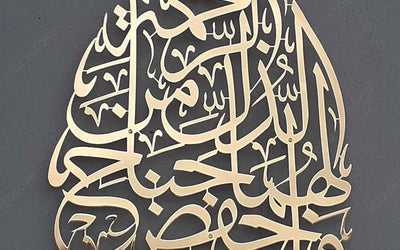
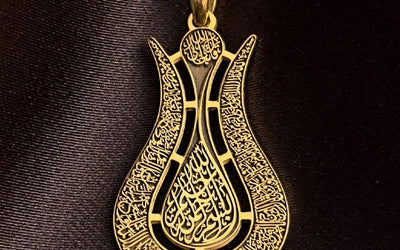
Calligraphy, the art of beautiful writing, reflects the meaning of the written text as well as carrying an aesthetic value. Arabic calligraphy has been used on the walls of mosque interiors for centuries and contains quotes from the Qur'an or religious messages. These writings are hung on the walls to remind worshippers of Allah's word and create a spiritual atmosphere, and the mihrab, the central point of worship, is often decorated with verses. Calligraphy in mosques also carries traditional and cultural traces from the past to the present.
The most common types of calligraphy are Kufic, Naskh, Sülüs, Divani, Riq'a, Ta'lik and Nasta'liq, which consist of the joining, bending, angling and overlapping of letters. Kufic, Naskh and Sülüs stand out among the calligraphic arts commonly used in mosques in Turkey. They are sometimes used as curtains with three-dimensional arabesques on carved wood, and sometimes as stucco or plaster ornaments that complement the geometric composition on the wall. Kufic is more often seen in combination with other calligraphic arts or in special ornaments. Our guide to the scripts explains how to tell them apart.

See what mosque decoration looks like today
The interior design of historical and newly built mosques in Turkey reflects traces of the architecture of the Seljuk and Ottoman empires, which ruled for about 900 years. Because the Seljuks and Ottomans interacted with many nations, their art developed in every field, and the motifs, colors and patterns of different cultures were included in the design in a way that stayed within the limits of the spiritual atmosphere.

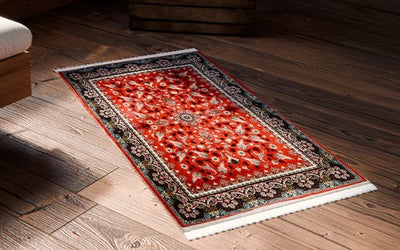
Today, motifs, tiles, calligraphy accessories, portable objects and mosque carpets that strengthen belief in monotheism are generally used on ceilings and walls, and wood has an important place in religious spaces. Among the works that have survived from the Seljuks to the present day, the following are noteworthy:
- wooden works with fine workmanship and ornaments, such as the mihrab, pulpit, pulpit door, entrance door and windows,
- plates with tile and stonework and calligraphy,
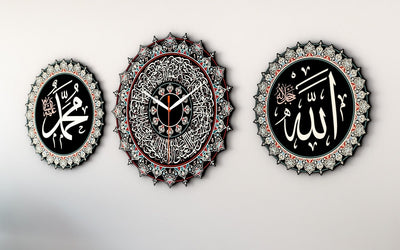
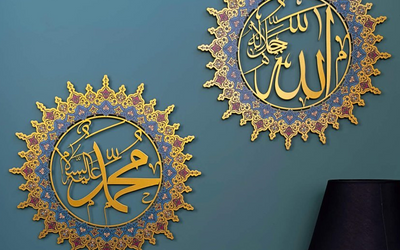
- wooden, metal and polyester plates and panels with the names of Allah (swt), Prophet Muhammad (s.a.w.) and the four caliphs,
- plates and religious paintings with motifs and reliefs containing verses,
- carved wooden ottomans,
- mosque clocks that show prayer times.
Bring the same ideas home with a mihrab set and calligraphy
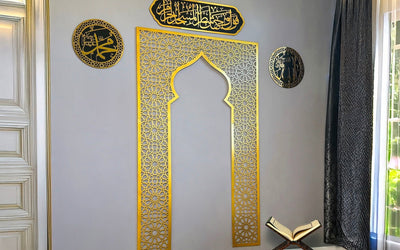
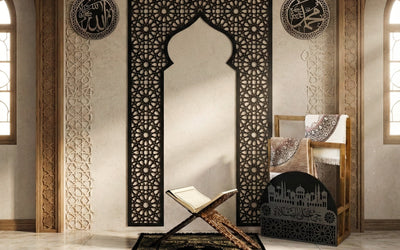
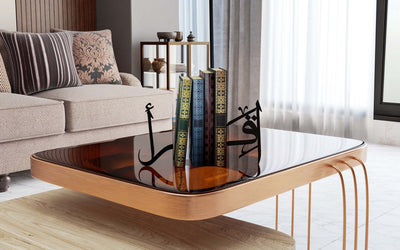
You can bring the mosque to a corner of your home or office and create a prayer corner. The metal mihrab set combines a metal mihrab with the words Allah and Muhammad on wood and the 144th verse of Surah Al-Baqarah on wood. The mihrab alone weighs 6.5 kg (medium) or 10.5 kg (large), and the set with extras 9 or 13.5 kg; the wood Allah and Muhammad pieces are 30×30 or 40×40 cm and the verse panel 70×21 or 90×27 cm.

The wooden mihrab set is the lighter option: the mihrab is black MDF colored through, not painted, in four sizes from 1.3 kg (S) to 4.9 kg (XL), and 2.8 to 6 kg with the gold extras. Our prayer corner setup guide shows how much floor you need.
Frequently asked questions
What does a mosque interior consist of?
Calligraphy plates on the walls, a mihrab decorated with geometric patterns and verses, and colorful stained glass windows, kept in harmony with the building.
Which scripts are most common in mosque decoration?
Kufic, Naskh, Sülüs, Divani, Riq'a, Ta'lik and Nasta'liq are the most common, and Kufic, Naskh and Sülüs stand out in mosques in Turkey.
What colors suit a prayer space?
Warm and soothing tones that do not overly distract attention.
Can I bring a mihrab into my home?
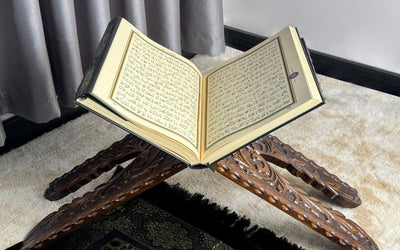
Yes. A metal or wooden mihrab set, with calligraphy and a rehal, can make a prayer corner at home or in an office.
Ready to choose? Browse our mihrab design wall art, where each product page lists its sizes and weights.
This article describes the design and ornament of mosque interiors; it does not give religious rulings, and questions about religious practice are best taken to your own local scholar. Sizes and weights come from our product pages and the sales figure from our own store data for the twelve months to 3 November 2026. Photographs are of our own products. This article was prepared with AI assistance. Updated November 2026: removed the duplicated paragraphs and company-pitch passages, replaced the unlinked product list with linked products and weights, and added a FAQ.
Find the piece for your wall
Browse the collection behind this guide. You have 30 days after receiving your order to request a return.


Leave a comment