Islamic Painting on Canvas and Wall Art Canvas Designs

Clear all
Filter
Clear all

86 products

86 products

Showing 32 of 86 products

Free Shipping
No Surprise Taxes
30-Day Hassle-free Returns
Flexible Payment Options

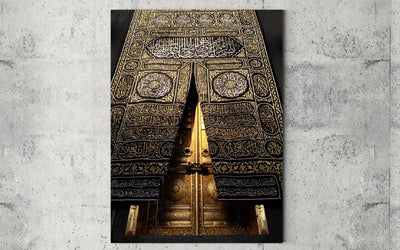
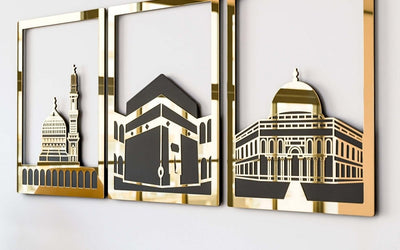
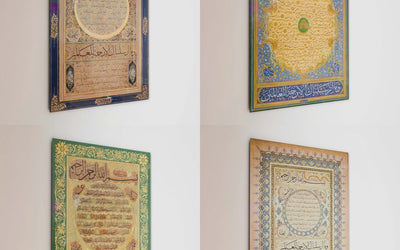
Canvas prints featuring high-resolution imagery of the Kaaba, Masjid Al-Aqsa, and Masjid An-Nabawi, alongside Arabic calligraphy of the 99 Names of Allah and Quranic verses.

Islamic canvas wall art: paintings and calligraphy on canvas

Every piece in this collection is printed on cotton canvas and stretched by hand over a kiln-dried pine frame 3 cm deep. The image wraps around the sides, so there is no white border and no separate frame is needed. Each canvas arrives ready to hang straight from its frame.

Themes

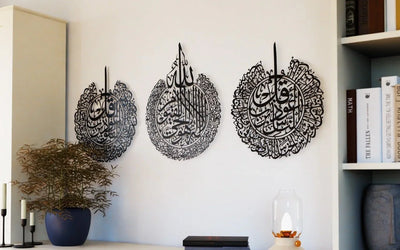
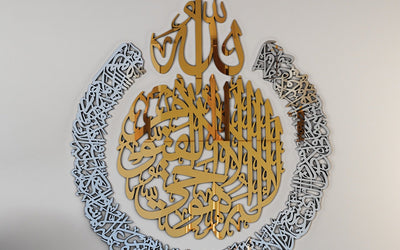
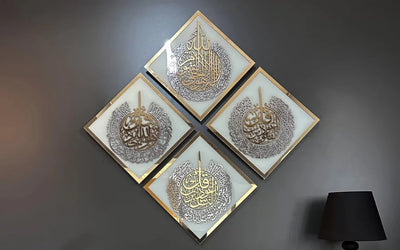
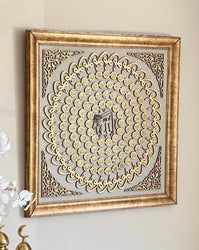
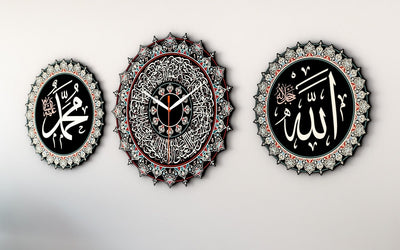
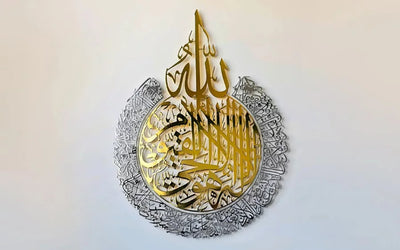
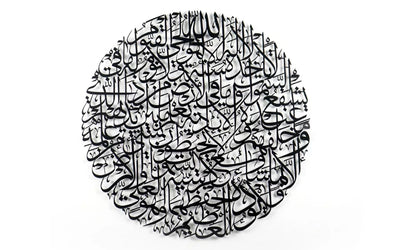
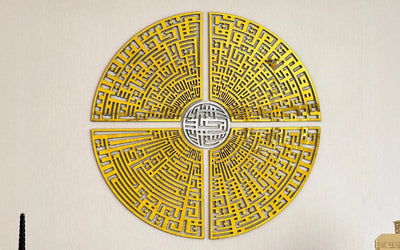
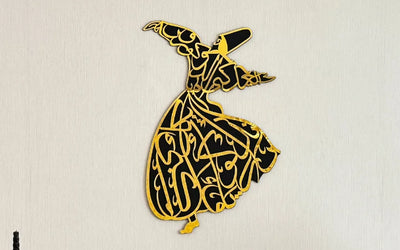
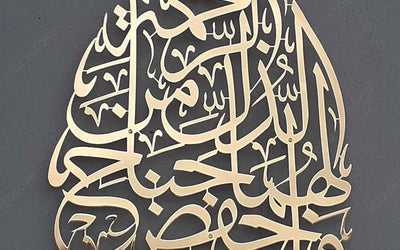
The holy places are the largest group, with the Kaaba and its gate, Masjid an-Nabawi and Masjid Al-Aqsa with the Dome of the Rock, several of them also part of our Palestine collection. Calligraphy canvases carry Ayatul Kursi, Surah Al-Ikhlas, Surah Ar-Rahman, the dua of Prophet Yunus and the 99 Names of Allah, and a set of whirling dervish designs adds a Sufi theme.

How the canvas is made

Part Detail
Canvas Cotton canvas
Print High-resolution print with a surface protection layer on top
Frame Kiln-dried pine, 3 cm deep, the image continues around the sides
Stretching Stretched by hand, with corner support on the larger sizes
Hanging Ready to hang from the frame, no extra fixture
Care Dry, soft cloth only, keep water, alcohol and cleaners off

Sizes

Format Sizes Good for
Landscape 35 x 25, 50 x 35, 70 x 50, 85 x 60, 100 x 70 and 110 x 80 cm Above a sofa, a bed or a sideboard
Portrait 25 x 35, 35 x 50, 50 x 70, 60 x 85, 70 x 100 and 80 x 110 cm Hallways, narrow walls and beside a door
Square 30 x 30 cm up to 100 x 100 cm in 10 cm steps A single focal point or a group of two or three

For a living room wall, the larger sizes from 70 x 50 cm upward read well from across the room. For a different look, compare our metal, tempered glass and wooden Islamic wall art.

Frequently Asked Questions

Islamic canvas paintings combine artistic beauty with spiritual meaning. Themes such as the Kaaba, Masjid an Nabawi and Qur’anic verses help transform your home into a peaceful and reflective space while maintaining strong cultural and religious symbolism.

Each canvas is cotton canvas with a high-resolution print and a surface protection layer on top. It is stretched by hand over a kiln-dried pine frame 3 cm deep, with corner support on the larger sizes so it stays taut. Dust it with a soft, dry cloth and keep water, alcohol and cleaners off the canvas.

Absolutely. Smaller canvases suit bedrooms, hallways or prayer corners, while larger sizes such as 50×70 or 80×110 cm work well in living rooms, offices and reception areas. All pieces arrive ready to hang.

Yes. Kaaba paintings, Ayat al Kursi canvases and Qur’an verse artworks make meaningful gifts for weddings, housewarmings, Ramadan, Eid and religious celebrations. Their timeless message ensures they are cherished for years.

Gently wipe the surface using a soft, dry cloth. Avoid excessive moisture or chemical cleaners to preserve the protective coating and color vibrancy.

Yes. Shipping is free to the US, the UK, Canada, Australia, most of Europe, Saudi Arabia, the UAE, Kuwait and Qatar. For the US, Canada, the EU and the UK, duties are already paid, so there is nothing extra to pay on delivery.

Painting is not inherently haram in Islam. Islamic scholars generally permit non figurative art such as calligraphy, geometric patterns and landscape scenes. Many Muslims avoid paintings of living beings in worship spaces, but decorative Islamic art—especially featuring Qur’anic verses and sacred architecture—is widely accepted.

Islamic art can depict animals depending on context. Historically, animals appear in manuscripts, palace decorations and Persian inspired artworks. However, many Muslims prefer avoiding animal depictions in prayer rooms or religious settings. For home décor, calligraphy and non figurative art remain the most common choices.

Depictions of people are generally discouraged in religious Islamic art, especially in spaces used for prayer. In broader cultural art traditions, figurative representation exists but is not commonly used in modern Islamic home décor. Most households prefer calligraphy, architecture themed paintings and abstract designs that align with spiritual values.

Yes. Paintings of sacred places like the Kaaba or Masjid an Nabawi are widely accepted and commonly used to inspire reflection, remembrance and spiritual connection.

Ayat al Kursi, Surah Al Ikhlas, names of Allah, Kaaba illustrations and dervish motifs are among the most admired. These themes blend aesthetic beauty with profound meaning.