








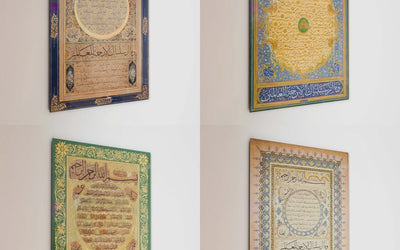








دليل أحجام الديكور الجداري الإسلامي: أي حجم يناسب جدارك؟
قِس الجدار: استهدف 60–75% من عرض الأثاث تحته. جدول أحجام بحسب موضع التعليق، مع ما تكشفه بيانات طلبات عام كامل.

في هذه الصفحة
قِس الجدار، لا القطعة. عند تعليق عمل فوق الأثاث، استهدف عرضًا يساوي 60–75% من عرض قطعة الأثاث تحته؛ وعلى جدار فارغ، نحو ثلثي العرض المتاح. عمليًا، يضع ذلك معظم قطع غرف المعيشة بين 90 و130 سم عرضًا. وتشير بيانات طلباتنا إلى الاتجاه نفسه من زاوية مختلفة.
الحجم هو أصعب ما يمكن تقديره من صورة المنتج، وهو أكثر ما يخطئ العملاء في اختياره. فالقطعة المصوّرة وحدها على خلفية بيضاء لا تمنح مرجعًا للحجم، لذا يميل المرء إلى تخيّلها أصغر مما هي عليه، ثم يطلب على هذا الأساس. ستجد أدناه جدولًا تسترشد به في القياس، وأرقام الطلبات التي تدعمه.
ابدأ بالجدار، لا بالقطعة الفنية
الرقم المفيد ليس حجم غرفتك، بل عرض ما ستعلّق القطعة فوقه، أو عرض الجدار الخالي إن لم يكن تحته شيء.
- فوق الأثاث — أريكة أو سرير أو خزانة جانبية أو طاولة كونسول. اضرب عرض الأثاث في 0.6 إلى 0.75. فأريكة بعرض 220 سم تناسبها قطعة أو مجموعة بعرض 130–165 سم.
- على جدار فارغ — قِس عرض الجدار بين حدوده، مثل إطار باب أو زاوية أو حافة نافذة، واستخدم نحو ثلثيه.
- اترك فراغًا. مسافة 15–25 سم بين أعلى الأثاث وأسفل القطعة تبدو مقصودة ومتناسقة. وعند تجاوز نحو 30 سم، يبدأ الاثنان في الظهور كعنصرين غير مرتبطين.
ارتفاع التعليق مسألة مستقلة عن الحجم وأبسط منه: اجعل مركز القطعة على ارتفاع نحو 145–155 سم من الأرض، وهو مستوى العين لمعظم الأشخاص وقوفًا. وفوق الأريكة، تكون الأولوية للمسافة الفاصلة؛ قِس صعودًا من ظهر الأريكة، لا نزولًا من السقف.
ماذا تخبرنا طلبات عام كامل عن الأحجام؟
راجعنا كل طلب خلال الأشهر الاثني عشر المنتهية في سبتمبر 2026 لمنتج يتضمن قياسًا بالسنتيمتر، أي 7,516 طلبًا من كتالوج الديكور الجداري، وصنفناها بحسب أطول ضلع في القطعة.
| أطول ضلع | نسبة الطلبات |
|---|---|
| أقل من 50 سم · أقل من 20 بوصة | 15% |
| 50–69 سم · 20–27 بوصة | 30% |
| 70–99 سم · 28–39 بوصة | 38% — الفئة الأكثر طلبًا |
| 100 سم فأكثر · 39 بوصة فأكثر | 18% |
85% مما نشحنه يبلغ أطول أضلاعه 50 سم أو أكثر. وقد يعكس هذا الرقم وحده طبيعة ما نوفره، لذلك حصرنا التحليل في 43 منتجًا تتوفر بثلاثة أحجام أو أكثر، حيث يختار العميل فعلًا بين صغير ومتوسط وكبير من التصميم نفسه:
- الخيار الأصغر: 23% من الطلبات
- الخيارات المتوسطة: 39%
- الخيار الأكبر: 38%
في 39 من هذه المنتجات الـ43، يبلغ أطول ضلع في الحجم الأكثر مبيعًا 50 سم أو أكثر. وعند إتاحة الاختيار، يختار المشترون الحجم الصغير في أقل من ربع الحالات.
الخلاصة ليست «اشترِ الأكبر»
هنا تصبح البيانات أكثر دلالة من النصائح المعتادة. ففي عدة منتجات، يقع الحجم الأكثر مبيعًا درجة واحدة دون أكبر حجم متاح:
| القطعة | الطلبات بحسب الحجم، وفق أطول ضلع |
|---|---|
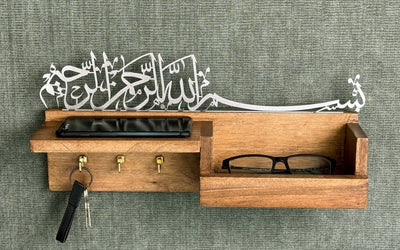
| البسملة الأفقية المعدنية | 69 سم → 111 · 130 سم → 123 · 179 سم → 86 |
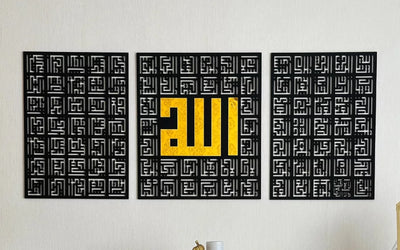
| طقم مربع لأربع سور بالخط الكوفي | 70 سم → 24 · 90 سم → 55 · 120 سم → 66 · 150 سم → 18 |
| الأسماء الحسنى الـ99، مربع معدني | 47 سم → 53 · 60 سم → 118 · 90 سم → 94 |

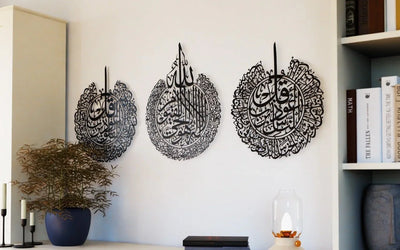
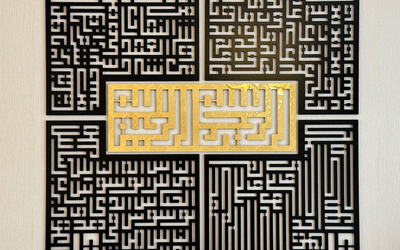
المعروض: شريط البسملة الأفقي بالأسود المطفي.
عند قراءة هذه الأرقام مع الجدول الأول، يظهر نمط متسق: الخيار الأصغر غالبًا غير مناسب، أما الأكبر على الإطلاق فهو اختيار لحالة خاصة، أي لجدار قادر فعلًا على استيعابه. وغالبًا ما يكون الخيار الموثوق في الجزء الأعلى من الأحجام المتوسطة. وإذا كنت تختار بين ثلاثة أحجام دون سبب حاسم، فثاني أكبر حجم هو الرهان الأكثر أمانًا.
ينبغي توضيح تحفظ واحد: هذه أعداد طلبات وليست درجات رضا. فهي تخبرنا بما اختاره الناس، لا بما تمنّوا لاحقًا لو اختاروه. لكنها تُظهر أن الأغلبية لا تشتري الحجم الصغير، بعكس الانطباع الغريزي الشائع أمام صورة المنتج.
جدول الأحجام
قِس العنصر المذكور في العمود الثاني، وطبّق قاعدة 60–75%، ثم قارن النتيجة بالأحجام المتوفرة فعلًا. والأبعاد في العمود الأخير خيارات حقيقية من كتالوجنا، وليست مقاسات مستهدفة تقريبية.
| الموضع | ما يجب قياسه | العرض المستهدف | الأحجام المناسبة |
|---|---|---|---|
| فوق أريكة بثلاثة مقاعد | عرض الأريكة، 200–220 سم | 120–165 سم | 130×30 · 140×55 · 120×120 |
| فوق أريكة بمقعدين | عرض الأريكة، 140–160 سم | 85–120 سم | 90×90 · 102×86 · 99×24 |
| فوق سرير كبير | عرض السرير، 160–180 سم | 100–135 سم | 130×30 · 102×86 · 120×120 |
| فوق سرير مزدوج | عرض السرير، 135–140 سم | 80–105 سم | 90×90 · 90×115 · 99×29 |
| فوق كونسول أو خزانة جانبية | عرض الأثاث، 100–120 سم | 60–90 سم | 67×87 · 69×15 · 60×60 |
| جدار بارز فارغ | عرض الجدار المتاح، 250 سم فأكثر | 150 سم فأكثر، أو مجموعة | 179×40 · طقم من أربع قطع 140×55 · 150×150 |
| المدخل، فوق خزانة أحذية | عرض الخزانة، 80–100 سم | 50–75 سم | 69×15 · 60×60 · 50×65 |
| ممر ضيق، بين الأبواب | الفراغ المتاح، 60–90 سم | 40–65 سم | 47×47 · 49×63 · 37×47.5 |
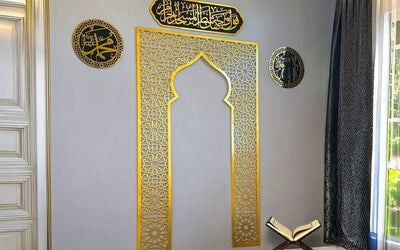
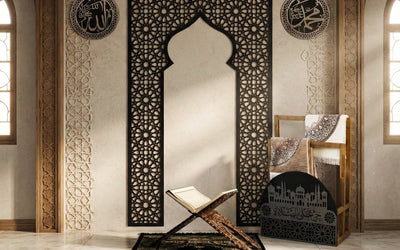
| ركن الصلاة، فوق السجادة | الجدار فوق سجادة بعرض 70–80 سم | الارتفاع أهم من العرض | 68×90 · 70×90 · لوحة كاملة الارتفاع |
يستحق صفان توضيحًا. الممر الضيق هو المكان الذي يكون فيه الحجم الصغير مناسبًا فعلًا، وهو استثناء تخفيه بيانات الطلبات لأن قطع الممرات تمثل حصة صغيرة من مبيعاتنا. أما ركن الصلاة فيخرج تمامًا عن قاعدة العرض: فالقطعة تُرى أثناء القيام والركوع والجلوس، لذا يكون حضورها الرأسي هو الأهم. نتناول ذلك بمزيد من التفصيل في دليل إعداد ركن للصلاة في المنزل، وتجد القطع المناسبة لهذا النوع من المساحات مجمعة في مكان واحد.
الشكل يغيّر الإجابة
قد تتصرف قطعتان لهما أطول ضلع متساوٍ بطريقة مختلفة تمامًا على الجدار. فالنسب هي التي تحدد القاعدة المناسبة.
طويلة وقليلة الارتفاع
يُقاس شريط الخط الأفقي بالعرض وحده، وهو الشكل الأكثر مرونة فوق الأريكة لأن ارتفاعه المحدود لا ينافس العناصر الأخرى. وفي هذه الفئة أظهرت بياناتنا تفوق الحجم المتوسط: الشريط الأفقي الطويل المتوفر بثلاثة أطوال يحقق أفضل مبيعاته بطول 130 سم، لا بطوله الكامل البالغ 179 سم. فوق أريكة عادية بثلاثة مقاعد، يبدو طول 179 سم أكبر من المناسب للأثاث؛ أما فوق أريكة زاوية بعرض 240 سم، فهو الخيار الوحيد الملائم.
رأسية
تُقيّم القطعة الرأسية بارتفاعها أكثر من عرضها، وهي الحل المناسب للمساحات الضيقة، بين بابين أو بجوار نافذة أو على جزء الجدار المتاح في الممر. وبالنسبة إلى لوحة رأسية متوفرة بثلاثة ارتفاعات، ترتفع أعداد الطلبات مع الحجم: 25 طلبًا لارتفاع 47 سم، و32 لارتفاع 65 سم، و62 لارتفاع 87 سم. فالارتفاع يمنح القطعة الرأسية حضورًا لا يمنحه العرض.

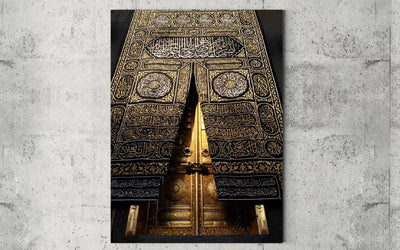
المعروض: لوحة آية الكرسي الرأسية هذه بالذهبي اللامع.
مربعة ودائرية
تبدو القطع المربعة والدائرية أكبر مما توحي به أبعادها، لأن العين تدرك المساحة لا أطول حافة. يغطي مربع بضلع 60 سم مساحة 3,600 سم² من الجدار، بينما يغطي شريط بطول 90 سم وارتفاع 25 سم مساحة 2,250 سم². لذلك فالمربع هو الجسم الأكبر رغم أن رقمه الأساسي أصغر، ولهذا تحتاج المقاسات المربعة أحيانًا إلى النزول درجة بدلًا من الصعود. وفي مربع الأسماء الحسنى الـ99 لدينا، تفوق مقاس 60 سم على 90 سم بعدد 118 طلبًا مقابل 94؛ فعند 90 سم، يتحول المربع من لوحة إلى عنصر معماري، ومعظم الجدران لا تحتاج إلى ذلك.

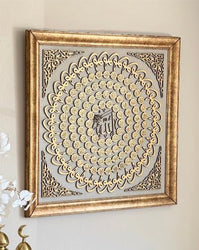
المعروض: مربع الأسماء الحسنى الـ99 المعدني باللون الذهبي.
المجموعات: قِس التكوين كله، لا القطعة الواحدة
التكوينات متعددة القطع هي ما تُخفق أدلة الأحجام غالبًا في توضيحه، لأن قياس القطعة الواحدة لم يعد الرقم المفيد.
احسب للمجموعة العرض الإجمالي: عرض جميع القطع مضافًا إليه الفراغ بينها. تساعد مسافات 5–10 سم للقطع الصغيرة و10–15 سم للأكبر على قراءة المجموعة كوحدة واحدة. فمجموعة من ثلاث لوحات بعرض 40 سم لكل منها، وبينها فراغات 10 سم، تمتد 140 سم لا 40؛ وهذه الـ140 سم هي التي يجب أن تحقق قاعدة 60–75%.
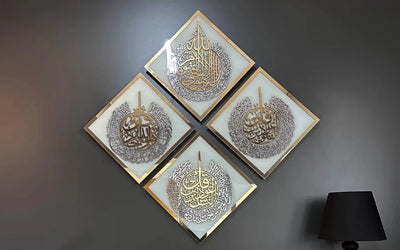
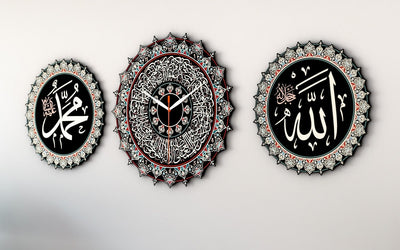
النتيجة العملية أن المجموعة تحتاج غالبًا إلى مساحة جدار أكبر مما يتوقعه الناس، وهي أكثر التكوينات عرضة للطلب بحجم أصغر من المناسب. تُباع مجموعة من قطعتين مثل هذه وفق أبعاد التكوين بعد تركيبه، لا أبعاد أي قطعة منفردة. تحقّق من ذلك قبل الطلب، فمواصفات كل صفحة منتج توضح طريقة القياس المستخدمة.
إذا كنت تنشئ جدارًا من قطع منفصلة بدل شراء طقم مصمم مسبقًا، فالحساب نفسه ينطبق، مع شرط إضافي: حافظ على اصطفاف الحواف الخارجية للمجموعة ضمن مستطيل وهمي. فمجموعة بعرض مناسب لكنها متخبطة رأسيًا تبدو عشوائية لا منسقة.
اختبار الشريط اللاصق ورقمان قبل الطلب
تسعون ثانية باستخدام شريط الدهان تحسم خلافات الحجم أكثر من أي جدول. ارسم حدود القطعة على الجدار عند ارتفاع التعليق المقصود، واتركها يومًا، ثم انظر إليها من مكان جلوسك المعتاد. فالحجم يُقرأ من مسافة مترين بطريقة مختلفة تمامًا عن شاشة تحملها على بُعد ذراع.

بعد ذلك، تحقّق من نقطتين على صفحة المنتج قبل اتخاذ القرار:
- ما الذي يمثله القياس. في المجموعة متعددة القطع، تأكد هل القياس للتكوين الكامل أم لقطعة واحدة. فهذا أكثر أسباب مفاجآت الحجم شيوعًا.
- الوزن. يرتبط الحجم بمتطلبات التثبيت. فالقطعة المعدنية بقياس 67×87 سم فأكثر تحتاج عادةً إلى تثبيت جداري مناسب بدل اللاصق، ويعتمد نوعه على ما إذا كان السطح ألواح جبس أو طوبًا أو لياسة. تحقّق من الوزن المذكور قبل افتراض طريقة التعليق.
كل الأبعاد الواردة في هذا الدليل مذكورة في صفحات المنتجات. يمكنك تصفية مجموعة القطع المعدنية كاملةً، مع الأحجام على كل صفحة، ومقارنة الخيارات بالجدول أعلاه.
ملاحظة بشأن نطاق الدليل: يقتصر هذا الدليل على القياس والنسب والتركيب. أما مسائل الممارسة الدينية، ومنها مكان عرض النصوص القرآنية وطريقته في المنزل، ففيها اختلاف بين العلماء؛ لذا نشجعك على الرجوع إلى عالم موثوق في منطقتك بدلًا من أخذ الإرشاد الديني من متجر.
أرقام الطلبات من بيانات متجرنا للأشهر الاثني عشر المنتهية في سبتمبر 2026، وتشمل 7,516 طلبًا لمنتجات تتضمن قياسات بالسنتيمتر. أُنشئت مشاهد الغرف بأدوات صور تعتمد على الذكاء الاصطناعي، أما العمل الجداري في كل مشهد فهو صورة للمنتج الحقيقي مضبوطة وفق أبعاده المدرجة. أُعدّ هذا المقال بمساعدة الذكاء الاصطناعي وراجعه أحد أعضاء فريق IWA Concept قبل النشر.


ترك تعليق